
Lawmakers deliberate bills on property, corporate tax
时间:2007-03-08 03:13:11
(单词翻译:单击)
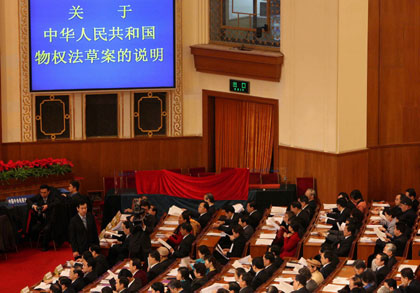
| Lawmakers listen to an explanation about the draft Property Rights Law that grants equal protection to state and private properties in the Great Hall of the People March 8, 2007. |
| Beijing, March 8 - China's top legislature, the National People's Congress (NPC), on Thursday started examining two draft laws aimed to grant equal protection to state and private properties and introduce a unified1 income tax for domestic and foreign-funded enterprises.
The draft property law and the draft enterprises income tax law were submitted for deliberation to the ongoing2 annual full session of the Tenth NPC, as the lawmakers started their second plenary meeting in the Great Hall of the People in Beijing at 9 a.m. Thursday. "Enacting3 the property law is necessitated4 by the need to uphold the basic socialist5 economic system...by the need to regulate the order of the socialist market economy...(and) by the need to safeguard the immediate6 interests of the people," said Wang Zhaoguo, vice7 chairman of the NPC Standing8 Committee, while reading an explanation on the law to the lawmakers. The law is enacted9 to apply "the principle of equal protection to the property of the state, the collective and the individual in accordance with the provisions of the Constitution" and "strengthen the protection of state-owned property", Wang said. He said under the conditions of the socialist market economy, which is stipulated10 in the Constitution, all players have equal status on the market, enjoy the same rights, observe the same rules and bear the same responsibilities. "If the different subjects of the market are not provided with equal protection, or if the methods used for settling disputes or the legal responsibilities to be borne are varied11, it will not be possible to develop the socialist market economy, nor will it be possible to uphold and improve the basic economic system of socialism," Wang said. To prevent loss of state property, the draft strengthens the protection of state-owned property from five aspects, stipulating12 that illegal possession, looting, illegal sharing, withholding13 or destruction of state property is prohibited. Those who cause loss of state property shall bear legal liability, according to a full text of the draft distributed to reporters at the session. Wang said the law was also drafted with the principle of "giving a full and accurate expression to the basic policies of the Party in rural areas at the present stage" and was written to address the most urgent problems to coordinate14 all kinds of interests and promote harmony. In order to grant the farmers a long-term and guaranteed land-use right, the draft property law stipulates15 that when farmers' land contracts expire, the contractor16 can have the contract renewed. As part of the draft civil code, the property law was submitted to the NPC Standing Committee for the first review in 2002 after nearly 10 years of preparation. To fully17 consider the interests of all social sectors18, the law's drafters published the law to the public in July 2005 and pooled more than 10,000 suggestions. After an unprecedented19 seven times of reading, NPC Standing Committee decided20 last December to put it for voting at the Fifth Session of the Tenth NPC, believing that the draft "represented a crystallization of the wisdom of the collective and was about to be mature". China's legal experts said that the draft reflects China's basic socialist economic system and will help improve China's socialist market economy and speed up the building of harmonious21 socialist society once adopted.
|
点击 收听单词发音
收听单词发音 |
1
unified
|
|
| (unify 的过去式和过去分词); 统一的; 统一标准的; 一元化的 | |
参考例句: |
|
|
|
|
2
ongoing
|
|
| adj.进行中的,前进的 | |
参考例句: |
|
|
|
|
3
enacting
|
|
| 制定(法律),通过(法案)( enact的现在分词 ) | |
参考例句: |
|
|
|
|
4
necessitated
|
|
| 使…成为必要,需要( necessitate的过去式和过去分词 ) | |
参考例句: |
|
|
|
|
5
socialist
|
|
| n.社会主义者;adj.社会主义的 | |
参考例句: |
|
|
|
|
6
immediate
|
|
| adj.立即的;直接的,最接近的;紧靠的 | |
参考例句: |
|
|
|
|
7
vice
|
|
| n.坏事;恶习;[pl.]台钳,老虎钳;adj.副的 | |
参考例句: |
|
|
|
|
8
standing
|
|
| n.持续,地位;adj.永久的,不动的,直立的,不流动的 | |
参考例句: |
|
|
|
|
9
enacted
|
|
| 制定(法律),通过(法案)( enact的过去式和过去分词 ) | |
参考例句: |
|
|
|
|
10
stipulated
|
|
| vt.& vi.规定;约定adj.[法]合同规定的 | |
参考例句: |
|
|
|
|
11
varied
|
|
| adj.多样的,多变化的 | |
参考例句: |
|
|
|
|
12
stipulating
|
|
| v.(尤指在协议或建议中)规定,约定,讲明(条件等)( stipulate的现在分词 );规定,明确要求 | |
参考例句: |
|
|
|
|
13
withholding
|
|
| 扣缴税款 | |
参考例句: |
|
|
|
|
14
coordinate
|
|
| adj.同等的,协调的;n.同等者;vt.协作,协调 | |
参考例句: |
|
|
|
|
15
stipulates
|
|
| n.(尤指在协议或建议中)规定,约定,讲明(条件等)( stipulate的名词复数 );规定,明确要求v.(尤指在协议或建议中)规定,约定,讲明(条件等)( stipulate的第三人称单数 );规定,明确要求 | |
参考例句: |
|
|
|
|
16
contractor
|
|
| n.订约人,承包人,收缩肌 | |
参考例句: |
|
|
|
|
17
fully
|
|
| adv.完全地,全部地,彻底地;充分地 | |
参考例句: |
|
|
|
|
18
sectors
|
|
| n.部门( sector的名词复数 );领域;防御地区;扇形 | |
参考例句: |
|
|
|
|
19
unprecedented
|
|
| adj.无前例的,新奇的 | |
参考例句: |
|
|
|
|
20
decided
|
|
| adj.决定了的,坚决的;明显的,明确的 | |
参考例句: |
|
|
|
|
21
harmonious
|
|
| adj.和睦的,调和的,和谐的,协调的 | |
参考例句: |
|
|
|
- 上一篇:China: Peaceful solution to Iranian nuclear issue is best op
- 下一篇:NPC examining draft methods for electing deputies from HK, M


©2005-2010英文阅读网