
Abe arrives in Beijing for official visit
时间:2006-10-09 06:40:08
(单词翻译:单击)
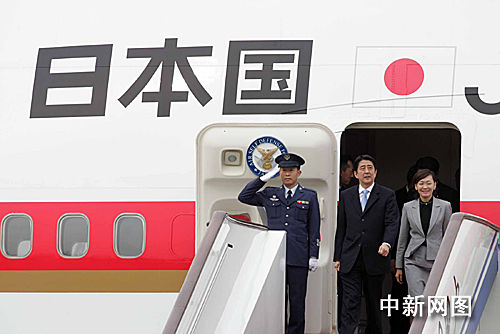
| Japanese Prime Minister Shinzo Abe arrived in the Chinese capital Sunday afternoon, starting an official visit to China. |
| Oct. 8 - Japanese Prime Minister Shinzo Abe arrived in the Chinese capital Sunday afternoon, starting an official visit to China.
Shortly afterwards, Abe is scheduled to meet Chinese President Hu Jintao, top legislator Wu Bangguo and Premier1 Wen Jiabao, respectively, before flying to Seoul early Monday for talks with President Roh Moo-hyun of the Republic of Korea. A special advisor2 of Abe said in Beijing on Saturday that the visit will aim at having a "candid3 and heart-to-heart" discussion with the Chinese leaders. I believe Abe is "ready to engage in mutual4 endeavor" with the Chinese leaders to overcome various issues which lie between China and Japan, the official said on condition of anonymity5. The meetings between Abe and Chinese leaders are arranged against extremely difficult environment for both sides, and is the result of willingness from both sides to try to overcome difficulties in order to make something happen, the source said. The change of the Japanese government gave an opportunity for both sides to build a new relationship. Actually, a face-to face talk between the two countries' leaders is a big success, it said. According to him, the nuclear test of the Democratic People's Republic of Korea will also be an "important agenda" of the meeting between Abe and the Chinese leaders. Abe is supposed to discuss Korean peninsula nuclear issue with Chinese top leaders, in order to push forward the stranded6 six-party talks for an early resumption, the official said. Abe, at 52, Japan's first premier born after World War Two, has pledged to improve relations with Japan's Asian neighbors, but refused to say whether or not he would visit the shrine7 as prime minister. Japan and China have to cooperate to solve many problems between them including the shrine visit issue, said the official. This is the first trip of the new prime minister since he took the office, which shows his high attention to China, the official said. Premier Wen invited Abe to visit China on the premise8 that "China and Japan reached a consensus9 on overcoming the political obstacle affecting bilateral10 relationship and promoting friendly and cooperative relationship," said Chinese Foreign Ministry11 spokesman Liu Jianchao on Wednesday. The leaders of the two countries halted the exchange of visits since former Japanese Prime Minister Junichiro Koizumi paid a homage12 to the Yasukuni Shrine in 2001, where Japan's war dead, including 14 class-A war criminals in WWII, are honored.
|
点击 收听单词发音
收听单词发音 |
1
premier
|
|
| adj.首要的;n.总理,首相 | |
参考例句: |
|
|
|
|
2
advisor
|
|
| n.顾问,指导老师,劝告者 | |
参考例句: |
|
|
|
|
3
candid
|
|
| adj.公正的,正直的;坦率的 | |
参考例句: |
|
|
|
|
4
mutual
|
|
| adj.相互的,彼此的;共同的,共有的 | |
参考例句: |
|
|
|
|
5
anonymity
|
|
| n.the condition of being anonymous | |
参考例句: |
|
|
|
|
6
stranded
|
|
| a.搁浅的,进退两难的 | |
参考例句: |
|
|
|
|
7
shrine
|
|
| n.圣地,神龛,庙;v.将...置于神龛内,把...奉为神圣 | |
参考例句: |
|
|
|
|
8
premise
|
|
| n.前提;v.提论,预述 | |
参考例句: |
|
|
|
|
9
consensus
|
|
| n.(意见等的)一致,一致同意,共识 | |
参考例句: |
|
|
|
|
10
bilateral
|
|
| adj.双方的,两边的,两侧的 | |
参考例句: |
|
|
|
|
11
ministry
|
|
| n.(政府的)部;牧师 | |
参考例句: |
|
|
|
|
12
homage
|
|
| n.尊敬,敬意,崇敬 | |
参考例句: |
|
|
|


©2005-2010英文阅读网