
Japanese court awards orphans left in China after WWII
时间:2006-12-04 00:54:53
(单词翻译:单击)
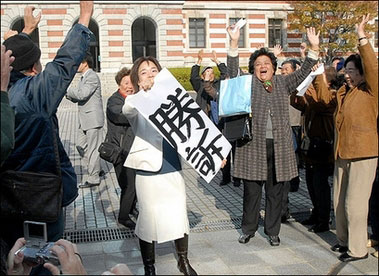
| War orphans1, who were Japanese children abandoned in China after the WWII, raise their hands to cheer as a supporter(C) shows a banner reading, "Winning Suit" outside of the Kobe district court, western Japan. A Japanese court for the first time ordered the state to compensate2 orphans left behind in China after World War II, saying the government had failed to help them. |
| Dec.3 - A Japanese court for the first time ordered the state to compensate orphans left behind in China after World War II, saying the government had failed to help them.
Thousands of Japanese children were abandoned in China when the Japanese occupiers were defeated in 1945 and their parents either were killed or fled. "The government bears a significant political responsibility to rescue war orphans," said presiding Judge Hitoshi Hashizume of the Kobe District Court in western Japan. Most war orphans were adopted and became culturally Chinese before returning to Japan as adults after the two countries normalized relations in 1972. The judge said the government "illegally posed obstacles to their repatriation3" by forbidding war orphans from returning unless their Japanese families took them in. He also said the government's vocational training and job-hunting services for returning orphans were poor, despite its "legal obligation to help them achieve self-reliance five years after repatriation." He ordered the government to pay a total of 468 million yen4 (US$4 million) to 61 of the 65 aging plaintiffs. The sum was well below the former war orphans' demands for a total of 2.145 billion yen. But the plaintiffs still broke out in applause as a supporter rushed out of the courtroom to tell them the verdict. "I'm very happy. I can finally be a grandma who can give at least 10,000 yen or so as a gift to a grandchild entering high school," said Mitsuko Miyajima, who was abandoned in China. "Finally I'm liberated5 from being a war orphan," she told reporters. Hisafumi Kitahara, chief of the welfare ministry's section in charge of war orphans, acknowledged: "It was a severe ruling for the government." The government has yet to decide whether it will appeal. "The government will decide after thoroughly6 discussing the matter with related government offices and agencies and examining the ruling," chief government spokesman Yasuhisa Shiozaki told a news conference. The court rejected the damages claims of four orphans because the statute7 of limitations had expired -- a frequent explanation by courts when dismissing lawsuits8 filed by Chinese and Korean victims of Japanese wartime atrocities9. It was the second ruling on war orphans. Last year, the Osaka District Court rejected similar demands filed by 32 war orphans, saying there was not sufficient evidence that the government was negligent10.
|
点击 收听单词发音
收听单词发音 |
1
orphans
|
|
| 孤儿( orphan的名词复数 ) | |
参考例句: |
|
|
|
|
2
compensate
|
|
| vt.补偿,赔偿;酬报 vi.弥补;补偿;抵消 | |
参考例句: |
|
|
|
|
3
repatriation
|
|
| n.遣送回国,归国 | |
参考例句: |
|
|
|
|
4
yen
|
|
| n. 日元;热望 | |
参考例句: |
|
|
|
|
5
liberated
|
|
| a.无拘束的,放纵的 | |
参考例句: |
|
|
|
|
6
thoroughly
|
|
| adv.完全地,彻底地,十足地 | |
参考例句: |
|
|
|
|
7
statute
|
|
| n.成文法,法令,法规;章程,规则,条例 | |
参考例句: |
|
|
|
|
8
lawsuits
|
|
| n.诉讼( lawsuit的名词复数 ) | |
参考例句: |
|
|
|
|
9
atrocities
|
|
| n.邪恶,暴行( atrocity的名词复数 );滔天大罪 | |
参考例句: |
|
|
|
|
10
negligent
|
|
| adj.疏忽的;玩忽的;粗心大意的 | |
参考例句: |
|
|
|


©2005-2010英文阅读网