
Thieves of a Feather
(单词翻译:单击)
Dec. 19, 2007
A diverse collection of birds is guilty of such thievery, and scientists have long wondered what these families of birds have in common. A new study suggests that big body size does not predict bullying2 behavior. Instead, among other traits, it is the size of the birds' brains that matters most.
 |
|
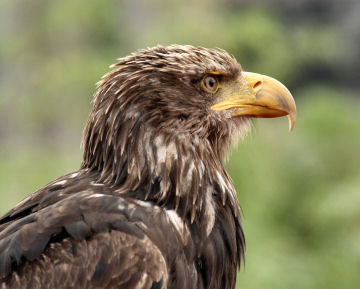
Golden eagles often steal food from other birds. Like other feathered thieves, these birds have big brains in relation to their overall size. |
|
iStockphoto |
Food theft is also called kleptoparasitism, and about 2 percent of the world's birds do it. That's 197 out of 9,672 known bird species that have been seen swiping food from other bird species.
Certain families of birds, including falcons3, eagles, and pelicans4, are especially prone5 to stealing. Some songbirds, on the other hand, are less likely to steal.
To learn more about what makes some birds tend toward a life of crime, scientists from the University of Québec at Montréal analyzed6 856 published reports of theft by one bird from another.
Researcher Julie Morand-Ferron, a member of the study team, says she started the project after watching birds in Barbados sneak1 dry dog food out of unattended bowls. The birds, called Carib grackles, then snatched pellets from each other.
For her study, Morand-Ferron considered only birds that steal from other species of birds (rather than from dogs, people, or the thief's own species). She read about some dramatic examples of thievery, including birds that grabbed food from others in midair and high-speed chases during which birds zigged and zagged through the sky. She learned that members of some species harass7 other birds until they spit up food that they'd swallowed.
The team found some patterns among the behaviors of the birds they studied. For one thing, bird families that often steal tend to live in open environments such as ocean shores. There, they can easily see the targets of their attacks.
Kleptoparasitic families also tend to eat fish, mice, and other vertebrates instead of just insects. These meatier meals are hard to catch, and they deliver lots of valuable calories, so they are tempting8 to steal.
Finally, kleptoparasitic birds tend to have big brains in relation to their bodies. That may seem surprising, since human bullies9 are often thought to be stronger in size than in smarts.
But for birds, stealing isn't about brute10 strength. It takes a clever bird to get food out of another hungry bird's claws, especially if that bird is bigger than you are. In other words, birds that steal might deserve some respect.
"There's this stigma11 attached to individuals who steal things to make a living: that they can't catch fish or forage12 on their own," says David Shealer of Loras College in Dubuque, Iowa.
But Shealer has studied birds called roseate terns. And the terns that steal, he says, are "far and away the best parents."
But don't take this as advice to start swiping cookies from your classmates' lunches. These are birds we're talking about!—Emily Sohn
 收听单词发音
 |
1
sneak
|
|
| vt.潜行(隐藏,填石缝);偷偷摸摸做;n.潜行;adj.暗中进行 | |
参考例句: |
|
|
|
|
2
bullying
|
|
| v.恐吓,威逼( bully的现在分词 );豪;跋扈 | |
参考例句: |
|
|
|
|
3
falcons
|
|
| n.猎鹰( falcon的名词复数 ) | |
参考例句: |
|
|
|
|
4
pelicans
|
|
| n.鹈鹕( pelican的名词复数 ) | |
参考例句: |
|
|
|
|
5
prone
|
|
| adj.(to)易于…的,很可能…的;俯卧的 | |
参考例句: |
|
|
|
|
6
analyzed
|
|
| v.分析( analyze的过去式和过去分词 );分解;解释;对…进行心理分析 | |
参考例句: |
|
|
|
|
7
harass
|
|
| vt.使烦恼,折磨,骚扰 | |
参考例句: |
|
|
|
|
8
tempting
|
|
| a.诱人的, 吸引人的 | |
参考例句: |
|
|
|
|
9
bullies
|
|
| n.欺凌弱小者, 开球 vt.恐吓, 威胁, 欺负 | |
参考例句: |
|
|
|
|
10
brute
|
|
| n.野兽,兽性 | |
参考例句: |
|
|
|
|
11
stigma
|
|
| n.耻辱,污名;(花的)柱头 | |
参考例句: |
|
|
|
|
12
forage
|
|
| n.(牛马的)饲料,粮草;v.搜寻,翻寻 | |
参考例句: |
|
|
|


