
Sweeeet! The Skinny on Sugar Substitutes
(单词翻译:单击)
But sugar is high in calories, and eating too much of it can cause weight gain and other health problems. That's why millions of people drink diet sodas2 and eat foods that contain artificial sweeteners in place of sugar. These synthetic3 chemicals taste sweet, but they have no calories.
 |
|
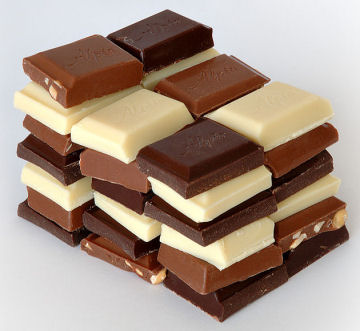
It can be hard to resist the temptation of chocolate and other sweet treats. |
|
André Karwath/Wikipedia |
But are sugar substitutes safe to use? The answer is complicated.
Sweet controversy4
For as long as artificial sweeteners have been around, they've been surrounded by controversy. Some studies have suggested that they cause cancer, allergies5, and other health problems, while other studies question those findings.
It's also unclear whether eating sugarfree foods can actually help people control their weight. Some researchers even think artificial sweeteners are helping6 fuel a widespread addiction7 to sugar.
 |
|
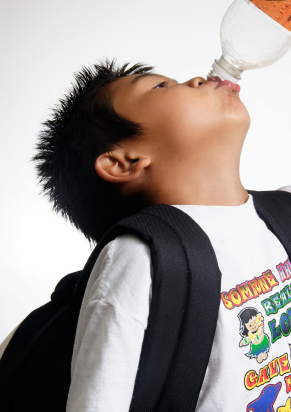
Regular or diet, drinking lots of soda can fuel a constant desire for sweets. |
|
|
"The more [sweets] you get, the more you need to feel satisfied," says David L. Katz, director of the Yale-Griffin Prevention Research Center in New Haven8, Conn.
"So, when it comes time for dinner," he says, "pasta sauce without added sugar tastes bland9. When it's time for dessert, intense sweetness is required" for people to be happy.
Despite the debate, plenty of people continue to down artificial sweeteners. In the United States alone, nearly 200 million people consume sugarfree or low-calorie products, according to the Calorie Control Council, a group that represents the diet-food industry. About half of the people who eat and drink sugarfree products make a habit of it—consuming an average of four such items every day.
People develop lifelong preferences for certain tastes and flavors during childhood, Katz says. So the choices you make now may affect eating habits for the rest of your life.
Acquired tastes
Some flavors, such as spicy10 and sour, require practice to enjoy, and our tongues are highly sensitive to these tastes. Just a dash of cayenne pepper, for example, can make a dish too fiery11 for some people to eat. A preference for sweet, on the other hand, comes naturally. Even babies like sugar—and lots of it.
That's because sugar is a rich source of calories, and calories provide energy. For our ancestors, craving12 sweet foods was an important way to ensure that they would get enough energy to survive, says Eric Walters, a biochemist at Rosalind Franklin University of Medicine and Science in North Chicago, Ill.
 |
|
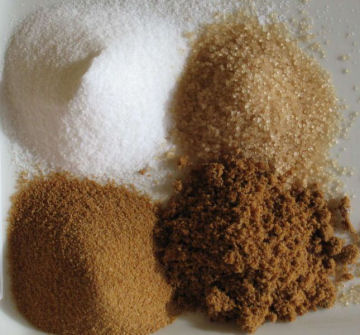
Sugar comes in a variety of forms or flavors—all sweet. |
|
Romain Behar/ Wikipedia |
Since more calories mean more energy, our taste buds developed a fairly high tolerance13 for sugar, Walters says. That means most people can handle—and enjoy—huge doses of sweet stuff.
Artificial sweeteners stimulate14 the same cells in our tongues as sugar does. Thanks to the substitutes' chemistry, however, they are hundreds to tens of thousands of times as sweet as sugar. That means that far less of them is required to make something taste sweet.
So, where a 12-ounce can of regular cola contains about 10 teaspoons15 of sugar, a can of diet cola contains less than a tenth of a teaspoon16 of the artificial-sweetener aspartame.
Because sugar substitutes work in such small quantities, they add almost no calories to a product. That's good news to many people on weight-reduction diets.
People with a disease called diabetes17 also often turn to artificial sweeteners because these products don't raise levels of sugar in the blood, as sugar does. Diabetics have to be extra careful about controlling blood-sugar levels.
But artificial sweeteners are chemicals, and they're made in labs. Sugar, by contrast, comes from living plants. Many people are concerned that artificial sweeteners, like some other synthetic chemicals, may cause health problems. Over the decades, the fears have waxed and waned18, but questions about their safety are still debated.
Scary sweeteners
Five artificial sweeteners are currently available in the United States (and several more in other countries). Saccharin19, the oldest artificial sweetener, was first produced in 1879. It's sold as Sweet'N Low in the United States. It's used in diet soda, candy, and other sugarfree products.
Some studies have linked saccharin to cancer in rodents20. But other studies have shown that animals must consume the equivalent of hundreds of cans of saccharin-containing soda every day to experience any ill effects.
In the minuscule21 amounts that people actually consume it, Walters says, "I think saccharin is very, very safe."
Aspartame (which is marketed as NutraSweet or Equal and appears in products such as Diet Coke and Diet Pepsi) has aroused similar health concerns since it was first produced more than 40 years ago. In the most recent scare, a group of Italian researchers found evidence that rats fed lots of aspartame developed cancer.
 |
|
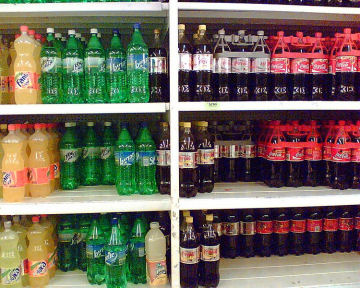
People criticize full-sugar sodas and diet versions for different reasons. |
|
David Shay/Wikipedia |
A panel of 10 American scientists examined the Italian research and found major flaws. The rats used in the experiments, for example, were sick to begin with. And the researchers didn't keep good track of exactly how much aspartame each rat consumed.
The U.S. panel also reviewed more than 500 aspartame studies and concluded the substance is safe. The majority of the studies, the scientists found, show that an average adult can eat as many as 19,400 packets of Equal a day without any permanent ill effects.
"I have no question in my mind that it is safe to consume aspartame, and I'd rather consume that than the calories of a full-sugar soda," says University of Maryland toxicologist Bernadene Magnuson, a member of the review panel. She encourages her kids to adopt the same attitude.
Some scientists and antisweetener activists22 remain concerned that previous safety studies have been biased23 in favor of artificial sweeteners. (The U.S. experts-panel study cited above, for example, was funded by a company that produces aspartame.)
"The only ones with the incentive24 to study [artificial sweeteners] are the companies marketing25 them," says Michael Jacobson, executive director of the Center for Science in the Public Interest in Washington, D.C. "If they say it causes cancer, they're out of business."
Diet food?
Millions of people have been consuming artificial sweeteners for many decades, and no diseases have broken out as a result. That's pretty good evidence that these substances are probably harmless to our health at the concentrations we eat them, Katz says.
Still, Katz himself avoids them, partly because he says there's no convincing evidence that "diet" products are a good diet strategy. In fact, eating artificially sweetened foods may actually sabotage26 weight-reduction efforts.
 |
|
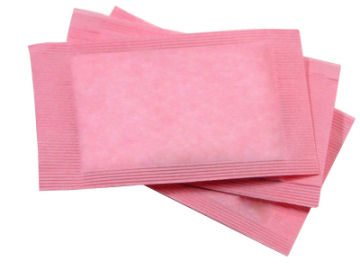
Packets of artificial sweeteners sit next to packets of sugar in many restaurants. |
|
|
In a 2004 study, for example, rats that drank a lot of a saccharin-sweetened drink ended up eating much more other food than did rats that had drunk equal amounts of a beverage27 sweetened with sugar.
What's behind the surprising result? Perhaps, Katz says, artificial sweeteners confuse the brain's ability to connect sweet tastes with the calories in sweet foods. So, rats that eat a lot of sugarfree foods may end up eating more high-calorie foods to compensate28. The same might be true of people.
Katz also suspects that bathing the tongue all day in any kind of sweetener—plant based or artificial—only increases desire for supersweet foods. Today, he says, most store-bought salad dressings29 and pasta sauces contain more sugar per gram than chocolate syrup30 does. We've become so used to the taste of these products that many people prefer them to unsweetened versions. (Artificially sweetened versions of these products are now available too).
Sugar, sugar everywhere . . .
Despite the questions and controversies31, artificial sweeteners, like sugar, are more popular than ever. They're appearing in more and more foods, from ice cream to jellies to cough drops. And the U.S. Food and Drug Administration is reviewing even more sugar substitutes for approval.
 |
|
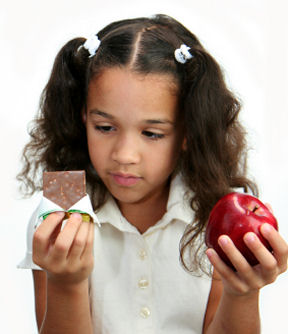
The more sugar you eat, the more you probably want. |
|
|
In an attempt to eat a healthy diet, Katz and his family try to avoid sugar as well as artificial sweeteners. The effort has influenced the taste preferences of his five children.
Because his kids eat so little sugar at home, Katz says, they experience sweetness overload32 when they eat cake or other sweet treats at a birthday party.
"They take one bite and then look for the wastebasket to spit it out," he says, "because [to them] it's sickeningly sweet."
 收听单词发音
 |
1
soda
|
|
| n.苏打水;汽水 | |
参考例句: |
|
|
|
|
2
sodas
|
|
| n.苏打( soda的名词复数 );碱;苏打水;汽水 | |
参考例句: |
|
|
|
|
3
synthetic
|
|
| adj.合成的,人工的;综合的;n.人工制品 | |
参考例句: |
|
|
|
|
4
controversy
|
|
| n.争论,辩论,争吵 | |
参考例句: |
|
|
|
|
5
allergies
|
|
| n.[医]过敏症;[口]厌恶,反感;(对食物、花粉、虫咬等的)过敏症( allergy的名词复数 );变态反应,变应性 | |
参考例句: |
|
|
|
|
6
helping
|
|
| n.食物的一份&adj.帮助人的,辅助的 | |
参考例句: |
|
|
|
|
7
addiction
|
|
| n.上瘾入迷,嗜好 | |
参考例句: |
|
|
|
|
8
haven
|
|
| n.安全的地方,避难所,庇护所 | |
参考例句: |
|
|
|
|
9
bland
|
|
| adj.淡而无味的,温和的,无刺激性的 | |
参考例句: |
|
|
|
|
10
spicy
|
|
| adj.加香料的;辛辣的,有风味的 | |
参考例句: |
|
|
|
|
11
fiery
|
|
| adj.燃烧着的,火红的;暴躁的;激烈的 | |
参考例句: |
|
|
|
|
12
craving
|
|
| n.渴望,热望 | |
参考例句: |
|
|
|
|
13
tolerance
|
|
| n.宽容;容忍,忍受;耐药力;公差 | |
参考例句: |
|
|
|
|
14
stimulate
|
|
| vt.刺激,使兴奋;激励,使…振奋 | |
参考例句: |
|
|
|
|
15
teaspoons
|
|
| n.茶匙( teaspoon的名词复数 );一茶匙的量 | |
参考例句: |
|
|
|
|
16
teaspoon
|
|
| n.茶匙 | |
参考例句: |
|
|
|
|
17
diabetes
|
|
| n.糖尿病 | |
参考例句: |
|
|
|
|
18
waned
|
|
| v.衰落( wane的过去式和过去分词 );(月)亏;变小;变暗淡 | |
参考例句: |
|
|
|
|
19
saccharin
|
|
| n.糖精 | |
参考例句: |
|
|
|
|
20
rodents
|
|
| n.啮齿目动物( rodent的名词复数 ) | |
参考例句: |
|
|
|
|
21
minuscule
|
|
| adj.非常小的;极不重要的 | |
参考例句: |
|
|
|
|
22
activists
|
|
| n.(政治活动的)积极分子,活动家( activist的名词复数 ) | |
参考例句: |
|
|
|
|
23
biased
|
|
| a.有偏见的 | |
参考例句: |
|
|
|
|
24
incentive
|
|
| n.刺激;动力;鼓励;诱因;动机 | |
参考例句: |
|
|
|
|
25
marketing
|
|
| n.行销,在市场的买卖,买东西 | |
参考例句: |
|
|
|
|
26
sabotage
|
|
| n.怠工,破坏活动,破坏;v.从事破坏活动,妨害,破坏 | |
参考例句: |
|
|
|
|
27
beverage
|
|
| n.(水,酒等之外的)饮料 | |
参考例句: |
|
|
|
|
28
compensate
|
|
| vt.补偿,赔偿;酬报 vi.弥补;补偿;抵消 | |
参考例句: |
|
|
|
|
29
dressings
|
|
| n.敷料剂;穿衣( dressing的名词复数 );穿戴;(拌制色拉的)调料;(保护伤口的)敷料 | |
参考例句: |
|
|
|
|
30
syrup
|
|
| n.糖浆,糖水 | |
参考例句: |
|
|
|
|
31
controversies
|
|
| 争论 | |
参考例句: |
|
|
|
|
32
overload
|
|
| vt.使超载;n.超载 | |
参考例句: |
|
|
|
- 上一篇:Play for Science
- 下一篇:Chew for Health


