
Economists warn of real estate bubble
时间:2007-01-15 00:38:12
(单词翻译:单击)
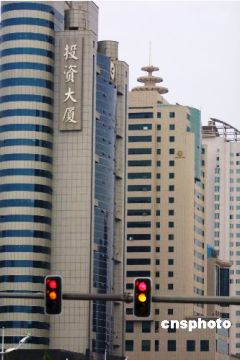
| Jan. 13 - Beijing should keep its interest rate high and the real estate sector1 cool, according to a recent report from top research body the Chinese Academy of Social Sciences (CASS).
CASS economists3 said in the report, 2006-07: World Economy Analysis and Forecast, that it was necessary to keep the interest rate high and real estate cool to avoid the risk of a crisis such as the one Japan weathered in the 1990s. "China should not increase domestic demand on the price as it could risk enlarging the real estate bubble," according to the report. China should draw lessons from Japan in the 1980s, when the country's low interest rates caused domestic demand to rise so much it eventually created a huge real estate bubble for the economy. "There are amazing similarities between the current Chinese real estate market and that of Japan's in the 1980s," the report said. "Prices in China's property market have grown fast, and inflation hasn't caught up yet. "But after two consecutive4 years of gross domestic product growth surpassing double digits5, signs of inflation have appeared." In 1985 under the Plaza6 Accord the Japanese yen7 immediately appreciated, heating up its real estate market. In the following six years commercial land prices in its six major cities increased threefold to three times higher than those in the United States at the time. Investors8 considered the property market was the best and most stable to invest in and believed interest rates would not change. It was easy to get loans from banks. But the situation was not given enough attention by the Japanese government, which introduced further financial and property policies to drive up the market. The property market fell apart in the 1990s, leading to "the lost 10 years" of economic stagnation9. The Japanese economy did not recover from the nightmare until the end of 2005. "Different from Japan, the Chinese government has adopted many macro regulatory measures in the sector since 2005, with good results," the report said. "However, the measures have not dealt with all the possible risks. China still has a lot in common with Japan at that time." The renminbi currently faces further appreciation10 pressure. Under a low interest-rate policy a great deal of capital flows to the property market. "The government should not be deluded11 by the stable commodity price index, as price growth was also nearly zero in Japan in the middle and late 1980s," the report said. "China should avoid the asset bubbles brought by national macro strategic adjustment." Enhancing interest rates will inevitably12 be another step in the country's macroeconomic controls, said Wu Jinglian, a renowned13 economist2 with the Development Research Center under the State Council, earlier this week. The bull-run of the stock market saw overall capital injected into the A-share market hit 677.9 billion yuan ($84.5 billion) at the end of 2006, more than three times the amount at the beginning of the year. "There is at least 30 trillion yuan ($3.75 trillion) in surplus fluid capital on the Chinese market, and this has heated up the real estate sector and the stock market." He called on the government to foster a market-based adjustment for major economic factors instead of introducing more control measures. |
点击 收听单词发音
收听单词发音 |
1
sector
|
|
| n.部门,部分;防御地段,防区;扇形 | |
参考例句: |
|
|
|
|
2
economist
|
|
| n.经济学家,经济专家,节俭的人 | |
参考例句: |
|
|
|
|
3
economists
|
|
| n.经济学家,经济专家( economist的名词复数 ) | |
参考例句: |
|
|
|
|
4
consecutive
|
|
| adj.连续的,联贯的,始终一贯的 | |
参考例句: |
|
|
|
|
5
digits
|
|
| n.数字( digit的名词复数 );手指,足趾 | |
参考例句: |
|
|
|
|
6
plaza
|
|
| n.广场,市场 | |
参考例句: |
|
|
|
|
7
yen
|
|
| n. 日元;热望 | |
参考例句: |
|
|
|
|
8
investors
|
|
| n.投资者,出资者( investor的名词复数 ) | |
参考例句: |
|
|
|
|
9
stagnation
|
|
| n. 停滞 | |
参考例句: |
|
|
|
|
10
appreciation
|
|
| n.评价;欣赏;感谢;领会,理解;价格上涨 | |
参考例句: |
|
|
|
|
11
deluded
|
|
| v.欺骗,哄骗( delude的过去式和过去分词 ) | |
参考例句: |
|
|
|
|
12
inevitably
|
|
| adv.不可避免地;必然发生地 | |
参考例句: |
|
|
|
|
13
renowned
|
|
| adj.著名的,有名望的,声誉鹊起的 | |
参考例句: |
|
|
|


©2005-2010英文阅读网