
Kenya begins huge slum clearance 肯尼亚开始贫民窟拆迁工程
(单词翻译:单击)
Kenyan authorities have begun to move residents out of Africa's largest slum - the Kibera settlement in Nairobi.
肯尼亚当局开始转移非洲最大的贫民窟--内罗毕的基贝拉居留地的居民。
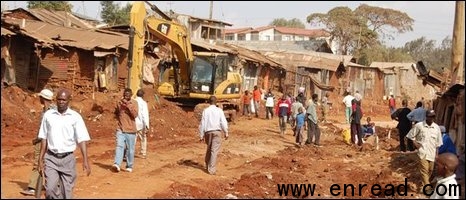 demolition1" width="466" border="0" src="http://www.enread.com/upimg/090917/4_065639_1.jpg" />
The bulldozers have moved in, but legal action has halted the demolition
Officials expect to take from two to five years to clear the slum, which is home to about one million people.
The first people to move are being rehoused nearby in 300 newly built apartments, each paying about $10 (£6) a month in rent.
But some residents and landlords have gone to court in a bid to stop the moves as they claim they own the land.
People in Kibera have had to cope with overcrowding, soaring(猛增的) crime rates and poor sanitation2(恶劣的卫生状况) in recent years.
Prime Minister Raila Odinga, who is the local MP, said the the project - which has UN backing - will prepare the ground for a "modern, low income residential3 estate with modern schools, markets, playgrounds and other facilities".
"Today we make the first step of a long journey towards meeting the basic needs and basic human rights of our people in the slum," he said.
Land sensitivities
The BBC's Anne Mawathe in Kibera said some families began moving with their belongings4 at 0630 local time.
They assembled to wait for trucks to take them to their new homes.
One elated(兴高采烈的) resident, Hilda Orlale, told the BBC how she and her family could not wait to get to their new home.
"Where we lived we never even had a toilet," she said.
"We had to pay three shillings (three US cents) to access one while the children used the flying toilets," she said referring to excrement5(排泄物,粪便) that is placed into plastic bags and then thrown out of windows.
But our reporter says land ownership in Kenya is very sensitive, and not everyone is happy with the scheme.
More than 80 people - a mix of landlords and residents - have taken their grievance6(委屈,冤情) to court, arguing that the land in Kibera is theirs and the government should not be allowed to demolish7 the shacks8(棚户).
About 90% of Kibera residents rent their homes from middle-class Kenyans who have built temporary structures on the government land over the last 30 years.
Planning worries
The Nubian community - an ethnic9 group who have been living on the land for more than a century - are also annoyed with the slum clearance10.
Ibrahim Diaby, a Nubian elder, says improvements should be made to the existing housing in the slum instead.
"My house has water and electricity, but I'm restricted from putting up a permanent building because the government says the land belongs to them," he said.
"It's a question of natural justice. We've lived in Kibera long before Nairobi was Nairobi, long before Kenya was Kenya."
The high court has ordered that the demolition cannot begin until their case is heard next month.
Mr Odinga said the slum now houses many more people than the Nubians, and must be redeveloped.
"Over the years, it has grown to be cosmopolitan11(世界性的,久经世故的) with many Kenyan communities found here," he said.
"But it also remains12 the biggest slum in Africa south of the Sahara. It is not a reputation we can be proud of."
Urban planners have also expressed concern at the project, saying that it risks repeating the mistakes of the past.
In another similar project poor families either shared two-roomed apartments with one or two other families in order to pay the rent, or sub-let them to middle-class families and moved back into the slums.
 收听单词发音
 |
1
demolition
|
|
| n.破坏,毁坏,毁坏之遗迹 | |
参考例句: |
|
|
|
|
2
sanitation
|
|
| n.公共卫生,环境卫生,卫生设备 | |
参考例句: |
|
|
|
|
3
residential
|
|
| adj.提供住宿的;居住的;住宅的 | |
参考例句: |
|
|
|
|
4
belongings
|
|
| n.私人物品,私人财物 | |
参考例句: |
|
|
|
|
5
excrement
|
|
| n.排泄物,粪便 | |
参考例句: |
|
|
|
|
6
grievance
|
|
| n.怨愤,气恼,委屈 | |
参考例句: |
|
|
|
|
7
demolish
|
|
| v.拆毁(建筑物等),推翻(计划、制度等) | |
参考例句: |
|
|
|
|
8
shacks
|
|
| n.窝棚,简陋的小屋( shack的名词复数 ) | |
参考例句: |
|
|
|
|
9
ethnic
|
|
| adj.人种的,种族的,异教徒的 | |
参考例句: |
|
|
|
|
10
clearance
|
|
| n.净空;许可(证);清算;清除,清理 | |
参考例句: |
|
|
|
|
11
cosmopolitan
|
|
| adj.世界性的,全世界的,四海为家的,全球的 | |
参考例句: |
|
|
|
|
12
remains
|
|
| n.剩余物,残留物;遗体,遗迹 | |
参考例句: |
|
|
|


