
HOW DO ANIMALS SPEND THE WINTER?
(单词翻译:单击)
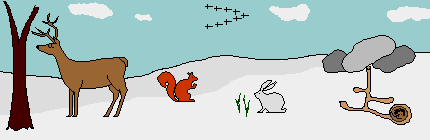
MIGRATE
Animals do many different, amazing things to get through the winter. Some of them "migrate." This means they travel to other places where the weather is warmer or they can find food.
Many birds migrate in the fall. Because the trip can be dangerous, some travel in large flocks. For example, geese fly in noisy, "V"-shaped groups. Other kinds of birds fly alone.
How do they know when it is time to leave for the winter? Scientists are still studying this. Many see migration1 as part of a yearly cycle of changes a bird goes through. The cycle is controlled by changes in the amount of daylight and the weather.
Birds can fly very long distances. For example, the Arctic tern nests close to the North Pole in the summer. In autumn, it flys south all the way to Antarctica. Each spring it returns north again.
Most birds migrate shorter distances. But how do they find their way to the same place each year? Birds seem to navigate2 like sailors once did, using the sun, moon and stars for direction. They also seem to have a compass in their brain for using the Earth's magnetic field.
Other animals migrate, too. There are a few mammals, like some bats, caribou3 and elk4, and whales that travel in search of food each winter. Many fish migrate. They may swim south, or move into deeper, warmer water.
Insects also migrate. Some butterflies and moths5 fly very long distances. For example, Monarch6 butterflies spend the summer in Canada and the Northern U.S. They migrate as far south as Mexico for the winter. Most migrating insects go much shorter distances. Many, like termites7 and Japanese beetles8, move downward into the soil. Earthworms also move down, some as far as six feet below the surface.
ADAPT
Some animals remain and stay active in the winter. They must adapt to the changing weather. Many make changes in their behavior or bodies. To keep warm, animals may grow new, thicker fur in the fall. On weasels and snowshoe rabbits, the new fur is white to help them hide in the snow.
Food is hard to find in the winter. Some animals, like squirrels, mice and beavers9, gather extra food in the fall and store it to eat later. Some, like rabbits and deer, spend winter looking for moss10, twigs11, bark and leaves to eat. Other animals eat different kinds of food as the seasons change. The red fox eats fruit and insects in the spring, summer and fall. In the winter, it can not find these things, so instead it eats small rodents12.
Animals may find winter shelter in holes in trees or logs, under rocks or leaves, or underground. Some mice even build tunnels through the snow. To try to stay warm, animals like squirrels and mice may huddle13 close together.
Certain spiders and insects may stay active if they live in frost-free areas and can find food to eat. There are a few insects, like the winter stone fly, crane fly, and snow fleas14, that are normally active in winter. Also, some fish stay active in cold water during the winter.
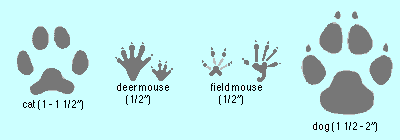
HIBERNATE15
Some animals "hibernate" for part or all of the winter. This is a special, very deep sleep. The animal's body temperature drops, and its heartbeat and breathing slow down. It uses very little energy. In the fall, these animals get ready for winter by eating extra food and storing it as body fat. They use this fat for energy while hibernating16. Some also store food like nuts or acorns17 to eat later in the winter. Bears, skunks18, chipmunks19, and some bats hibernate.
AND MORE
Cold-blooded animals like fish, frogs, snakes and turtles have no way to keep warm during the winter. Snakes and many other reptiles20 find shelter in holes or burrows21, and spend the winter inactive, or dormant22. This is similar to hibernation23.
Water makes a good shelter for many animals. When the weather gets cold, they move to the bottom of lakes and ponds. There, frogs, turtles and many fish hide under rocks, logs or fallen leaves. They may even bury themselves in the mud. They become dormant. Cold water holds more oxygen than warm water, and the frogs and turtles can breath by absorbing it through their skin.
Insects look for winter shelter in holes in the ground, under the bark of trees, deep inside rotting logs or in any small crack they can find. One of the most interesting places is in a gall24. A gall is a swelling25 on a plant. It is caused by certain insects, fungi26 or bacteria. They make a chemical that affects the plant's growth in a small area, forming a lump. The gall becomes its maker's home and food source.
Every type of insect has its own life cycle, which is the way it grows and changes. Different insects spend the winter in different stages of their lives. Many insects spend the winter dormant, or in "diapause." Diapause is like hibernation. It is a time when growth and development stop. The insect's heartbeat, breathing and temperature drop. Some insects spend the winter as worm-like larvae27. Others spend the winter as pupae. (This is a time when insects change from one form to another.) Other insects die after laying eggs in the fall. The eggs hatch into new insects in the spring and everything begins all over again.
 收听单词发音
 |
1
migration
|
|
| n.迁移,移居,(鸟类等的)迁徙 | |
参考例句: |
|
|
|
|
2
navigate
|
|
| v.航行,飞行;导航,领航 | |
参考例句: |
|
|
|
|
3
caribou
|
|
| n.北美驯鹿 | |
参考例句: |
|
|
|
|
4
elk
|
|
| n.麋鹿 | |
参考例句: |
|
|
|
|
5
moths
|
|
| n.蛾( moth的名词复数 ) | |
参考例句: |
|
|
|
|
6
monarch
|
|
| n.帝王,君主,最高统治者 | |
参考例句: |
|
|
|
|
7
termites
|
|
| n.白蚁( termite的名词复数 ) | |
参考例句: |
|
|
|
|
8
beetles
|
|
| n.甲虫( beetle的名词复数 ) | |
参考例句: |
|
|
|
|
9
beavers
|
|
| 海狸( beaver的名词复数 ); 海狸皮毛; 棕灰色; 拼命工作的人 | |
参考例句: |
|
|
|
|
10
moss
|
|
| n.苔,藓,地衣 | |
参考例句: |
|
|
|
|
11
twigs
|
|
| 细枝,嫩枝( twig的名词复数 ) | |
参考例句: |
|
|
|
|
12
rodents
|
|
| n.啮齿目动物( rodent的名词复数 ) | |
参考例句: |
|
|
|
|
13
huddle
|
|
| vi.挤作一团;蜷缩;vt.聚集;n.挤在一起的人 | |
参考例句: |
|
|
|
|
14
fleas
|
|
| n.跳蚤( flea的名词复数 );爱财如命;没好气地(拒绝某人的要求) | |
参考例句: |
|
|
|
|
15
hibernate
|
|
| v.冬眠,蛰伏 | |
参考例句: |
|
|
|
|
16
hibernating
|
|
| (某些动物)冬眠,蛰伏( hibernate的现在分词 ) | |
参考例句: |
|
|
|
|
17
acorns
|
|
| n.橡子,栎实( acorn的名词复数 ) | |
参考例句: |
|
|
|
|
18
skunks
|
|
| n.臭鼬( skunk的名词复数 );臭鼬毛皮;卑鄙的人;可恶的人 | |
参考例句: |
|
|
|
|
19
chipmunks
|
|
| n.金花鼠( chipmunk的名词复数 ) | |
参考例句: |
|
|
|
|
|
20
reptiles
|
|
| n.爬行动物,爬虫( reptile的名词复数 ) | |
参考例句: |
|
|
|
|
21
burrows
|
|
| n.地洞( burrow的名词复数 )v.挖掘(洞穴),挖洞( burrow的第三人称单数 );翻寻 | |
参考例句: |
|
|
|
|
22
dormant
|
|
| adj.暂停活动的;休眠的;潜伏的 | |
参考例句: |
|
|
|
|
23
hibernation
|
|
| n.冬眠 | |
参考例句: |
|
|
|
|
24
gall
|
|
| v.使烦恼,使焦躁,难堪;n.磨难 | |
参考例句: |
|
|
|
|
25
swelling
|
|
| n.肿胀 | |
参考例句: |
|
|
|
|
26
fungi
|
|
| n.真菌,霉菌 | |
参考例句: |
|
|
|
|
27
larvae
|
|
| n.幼虫 | |
参考例句: |
|
|
|


