
臀部脂肪多有益健康?
(单词翻译:单击)
People with fat in their thighs1 and backsides may live longer because the fat traps harmful fatty particles and actively2 secretes3 helpful compounds, according to a report published on Tuesday.
本周二发布的一项报告称,大腿和臀部脂肪较多的人可能更长寿,因为脂肪能锁住有害的脂肪颗粒,并可有效分泌出有益化合物。
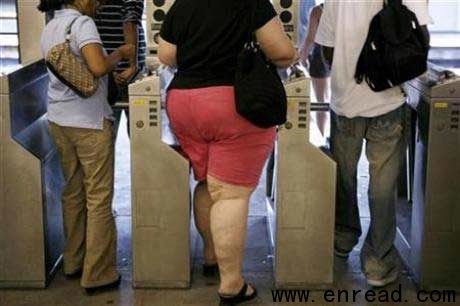
People with fat in their thighs and backsides may live longer because the fat traps harmful fatty particles and actively secretes helpful compounds, according to a report published on Tuesday.
Many studies have shown that people who accumulate积攒,累积 fat around the abdomen4腹部 and stomach are more likely to die of heart disease and other causes than bottom-heavy people, but the reasons are not clear.
This may be because several different mechanisms5 are involved, said Konstantinos Manolopoulos of Britain's University of Oxford6.
"It is the protective role of lower body, that is, gluteofemoral fat, that is striking," Manolopoulos wrote in the International journal of Obesity7肥大,肥胖.
"The protective properties of the lower-body fat depot脂肪组织 have been confirmed in many studies," he added.
Fat on the bottom and thighs appears to store excess fatty acids脂肪酸, said Manolopoulos, who reviewed published scientific studies for his report.
Pear-shaped people also appear to have lower levels of compounds called inflammatory炎症的,煽动性的 cytokines细胞因子,细胞激素 -- signaling chemicals involved in the body's response to infection that also can play a role in heart disease and diabetes糖尿病 when they are inappropriately active.
Fat on the legs may also absorb吸收,承担 fats from the diet, keeping them from overwhelming压倒,淹没 the body when people overeat, Manolopoulos said.
Cholesterol10 levels reflect a tricky11 balance between high density12 lipoprotein高密度脂蛋白, the HDL or "good" cholesterol that removes harmful fats from the blood, and low-density lipoprotein脂蛋白, the "bad" LDL cholesterol胆固醇 that can harden and block the arteries13.
Fat in the thighs大腿 may also be more stable, he said, with studies showing abdominal14腹部的 fat breaks down quickly during fasting or stress, releasing potentially harmful components15 from the fat.
"The exact regulatory mechanisms of fatty acid release and storage and their effect on short- and long-term fatty acid metabolism16 remain to be analyzed," Manolopoulos wrote.
Leg fat may also be better at producing hormones17 such as leptin瘦素,瘦蛋白, which are made by fat and affect appetite and metabolism新陈代谢 -- although Manolopoulos said this is poorly understood.
Understanding all this could lead to better drugs for treating obesity and related disease such as diabetes9 and heart disease, Manolopoulos said.
 收听单词发音
 |
1
thighs
|
|
| n.股,大腿( thigh的名词复数 );食用的鸡(等的)腿 | |
参考例句: |
|
|
|
|
2
actively
|
|
| adv.积极地,勤奋地 | |
参考例句: |
|
|
|
|
3
secretes
|
|
| v.(尤指动物或植物器官)分泌( secrete的第三人称单数 );隐匿,隐藏 | |
参考例句: |
|
|
|
|
4
abdomen
|
|
| n.腹,下腹(胸部到腿部的部分) | |
参考例句: |
|
|
|
|
5
mechanisms
|
|
| n.机械( mechanism的名词复数 );机械装置;[生物学] 机制;机械作用 | |
参考例句: |
|
|
|
|
6
Oxford
|
|
| n.牛津(英国城市) | |
参考例句: |
|
|
|
|
7
obesity
|
|
| n.肥胖,肥大 | |
参考例句: |
|
|
|
|
8
depot
|
|
| n.仓库,储藏处;公共汽车站;火车站 | |
参考例句: |
|
|
|
|
9
diabetes
|
|
| n.糖尿病 | |
参考例句: |
|
|
|
|
10
cholesterol
|
|
| n.(U)胆固醇 | |
参考例句: |
|
|
|
|
11
tricky
|
|
| adj.狡猾的,奸诈的;(工作等)棘手的,微妙的 | |
参考例句: |
|
|
|
|
12
density
|
|
| n.密集,密度,浓度 | |
参考例句: |
|
|
|
|
13
arteries
|
|
| n.动脉( artery的名词复数 );干线,要道 | |
参考例句: |
|
|
|
|
14
abdominal
|
|
| adj.腹(部)的,下腹的;n.腹肌 | |
参考例句: |
|
|
|
|
15
components
|
|
| (机器、设备等的)构成要素,零件,成分; 成分( component的名词复数 ); [物理化学]组分; [数学]分量; (混合物的)组成部分 | |
参考例句: |
|
|
|
|
16
metabolism
|
|
| n.新陈代谢 | |
参考例句: |
|
|
|
|
17
hormones
|
|
| n. 荷尔蒙,激素 名词hormone的复数形式 | |
参考例句: |
|
|
|
- 上一篇:看《阿凡达》会感到头痛?
- 下一篇:研究:长期缺觉没法补


